

Login as…

How to be a probiotics pro
A helpful guide to the most helpful of bacteria
It’s 1996. The flip mobile phone goes on sale, ‘Take That’ announce their break-up and women’s football is played at the Olympic games for the very first time. Suddenly, seemingly out of nowhere, the word ‘probiotic’ appears in our vocabulary – in the shape of a well-known yogurt drink.
Nearly 30 years later, most of us have heard of probiotics. In fact around half the UK population regularly buy a product that contains them. But do you know exactly what probiotics are? The different types available? And what their precise health benefits and clinical uses can be? Let’s take a look.

What are probiotics?
Probiotics are live microorganisms, primarily bacteria and yeasts, that line your digestive tract. They most commonly belong to the biological classification ‘Lactobacillus, Bifidobacterium’, and the yeast ‘Saccharomyces boulardii’.
Probiotics are often referred to as ‘good’ or ‘friendly’ bacteria due to their role in supporting various aspects of our wellbeing, from digestion and nutrient absorption to immune function and even our mental health.

Meet your microbiome
Inside our bodies, most notably in our small and large intestines, is a bustling world of trillions of microorganisms or microbes that includes bacteria, fungi, parasites and viruses. This is your microbiome – and we all have our own unique network, determined at birth.
In a healthy person, our microbes live side by side in perfect harmony. But if there’s a disturbance in the balance – caused by infectious illnesses, certain diets, or the prolonged use of antibiotics or other bacteria-destroying medications— our bodies may become more susceptible to illness and disease.
Probiotics are medically proven to assist the balance in our microbiome and keep us fit and well.
Clinically, the most established benefits of probiotics are their role in supporting our gastrointestinal health. But strain-specific effects have also been recognised, including allergy prevention, improved oral health and even improving aspects of our mental health.
Here are four key benefits of probiotics:
- Probiotics are good for our gut
They’re proven to be effective in managing and preventing diarrhoea associated with antibiotic use and Clostridioides difficile or C.diff infections, which can be a significant cause for concern amongst the elderly, or people with compromised immune systems.
If you suffer from a chronic digestive condition, such as IBS, IBD or functional bloating, then probiotics can also be your friend. They can be taken to reduce bloating, gas and discomfort and in clinical use, can be used as a complementary treatment for inflammatory bowel diseases such as ulcerative colitis in the large intestine.
- Probiotics can boost our immune systems
By interacting with our microbes and the lining of our digestive tracts, probiotics help to produce short-chain fatty acids that act as a defence against pathogens and toxins. They can be especially important during periods of high infection risk (e.g. during the winter months or when we go on away on holiday.) They can also reduce the frequency and duration of upper respiratory tract infections.
- Probiotics can beat bad breath
By helping to maintain the balance of healthy bacteria in our mouths, probiotics can reduce gingivitis, periodontitis and bad breath.
- Probiotics could be good for our mental health
The gut-brain axis is a two-way communication network that links our gastrointestinal tract and central nervous system. There’s now emerging evidence that suggests certain probiotics (psychobiotics) can have a role in reducing anxiety, depression and improving mood – although more research in this field is needed.
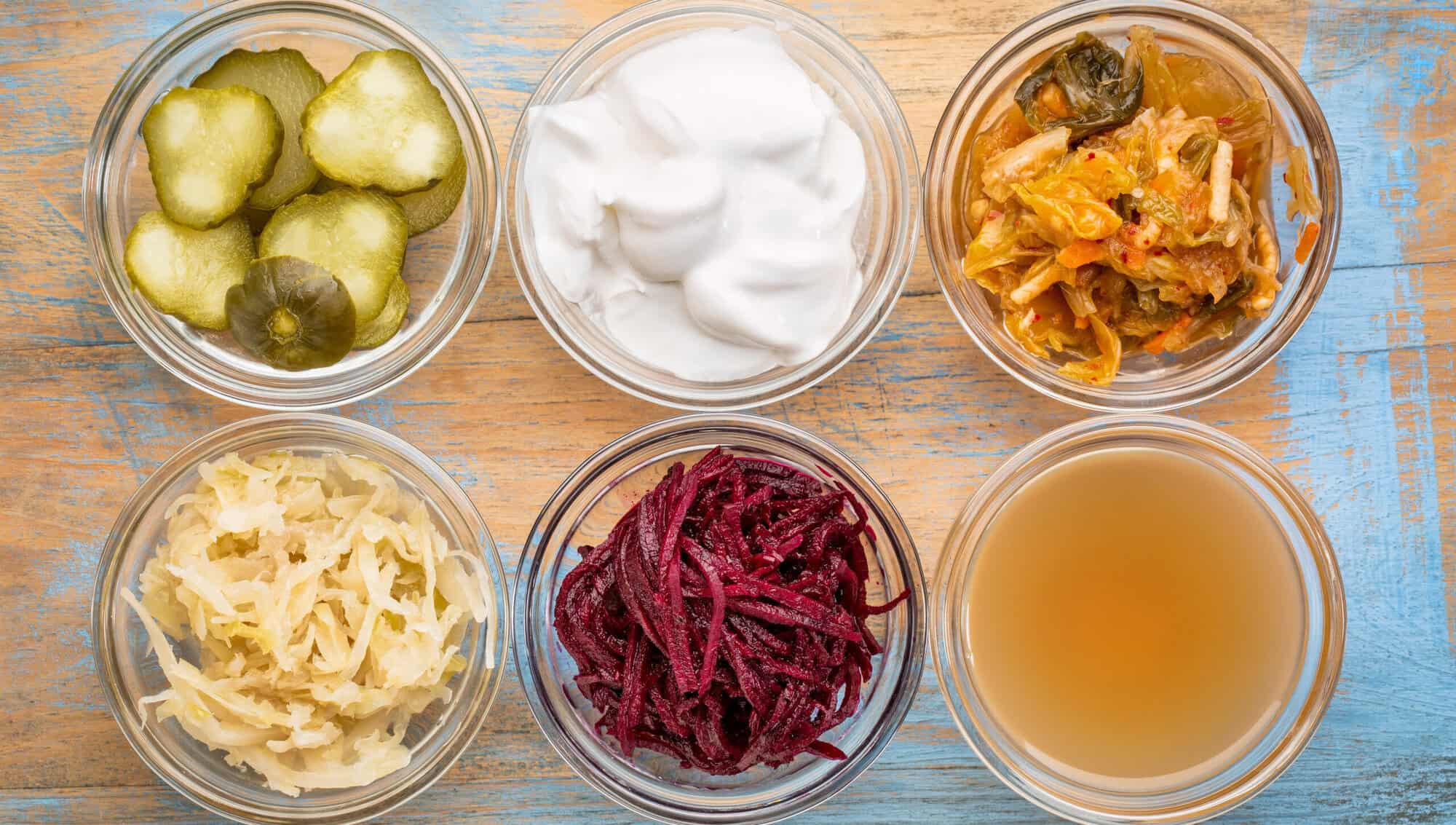
Where to find probiotics
Probiotics are naturally present in fermented foods such as yogurt, kefir, sauerkraut, kimchi, miso, and kombucha. They’re also available as food supplements, which can contain single or multiple strains in varying doses that are measured in CFU—colony-forming units. These are the number of live, active microorganisms (bacteria or yeast) in each supplement.
Not all probiotics are the same—strain-specific effects are important, and not all products are equally effective.
Although probiotics are generally safe for us all, including children and the elderly, care is advised in severely immunocompromised patients or those with critical illnesses, due to rare risks of systemic infection. And infants at risk of allergy or gastrointestinal disorders should only be given probiotics when advised by a paediatrician.

We’re pro probiotic!
At VitOrtho, we’re passionate about using the latest nutritional science to support your everyday wellbeing. And we believe probiotics have a strong part to play.
Our range of Probiotic supplements for men, women and children come in powder or capsule form and are a convenient way to improve or maintain helpful bacteria in the gut. Due to the enteric coating on our capsules they can be spilt open and will still deliver all the goodness where it’s needed. From our expertly formulated Multi-Strain Biotic with 10 strains of 8 billion helpful, live bacteria. To EnzymeForm, specifically formulated to support bowel function and provide digestion support. All just the job for a healthy body and mind.
Why not find out more about our range and become a Probiotic pro now?
